
Task Objective: Narrowing down our topic
To initiate the formal research phase of the group project by transitioning from a broad topic interest to a critically defined research area. The primary objective is to conduct a preliminary literature mapping exercise, utilizing search engines (Google Scholar/Library Databases) not just as retrieval tools, but as objects of critique.
My Objective (Self-Initiated Work)
I was particularly struck by the workshop's focus on D'Ignazio & Klein's concept of "counter-data". It made me realise that a Google Scholar search isn't neutral; it's an algorithmic ranking of privilege.
The analog approach to digital teams
We sat down with our colour-coded sketch pens to map out the chaos of our initial ideas. The session was a exercise in divergence and convergence. We revisited our earlier discussions on Climate Change and Feminist Re-representation, but the energy in the room shifted when we started exploring more personal cultural narratives.
We discussed how Chinese families set up children on blind dates for marriage, a fascinating cultural narrative, but we struggled to fit it into a robust digital intervention.
For a brief moment, we genuinely entertained the idea of a social network exclusively for plants.
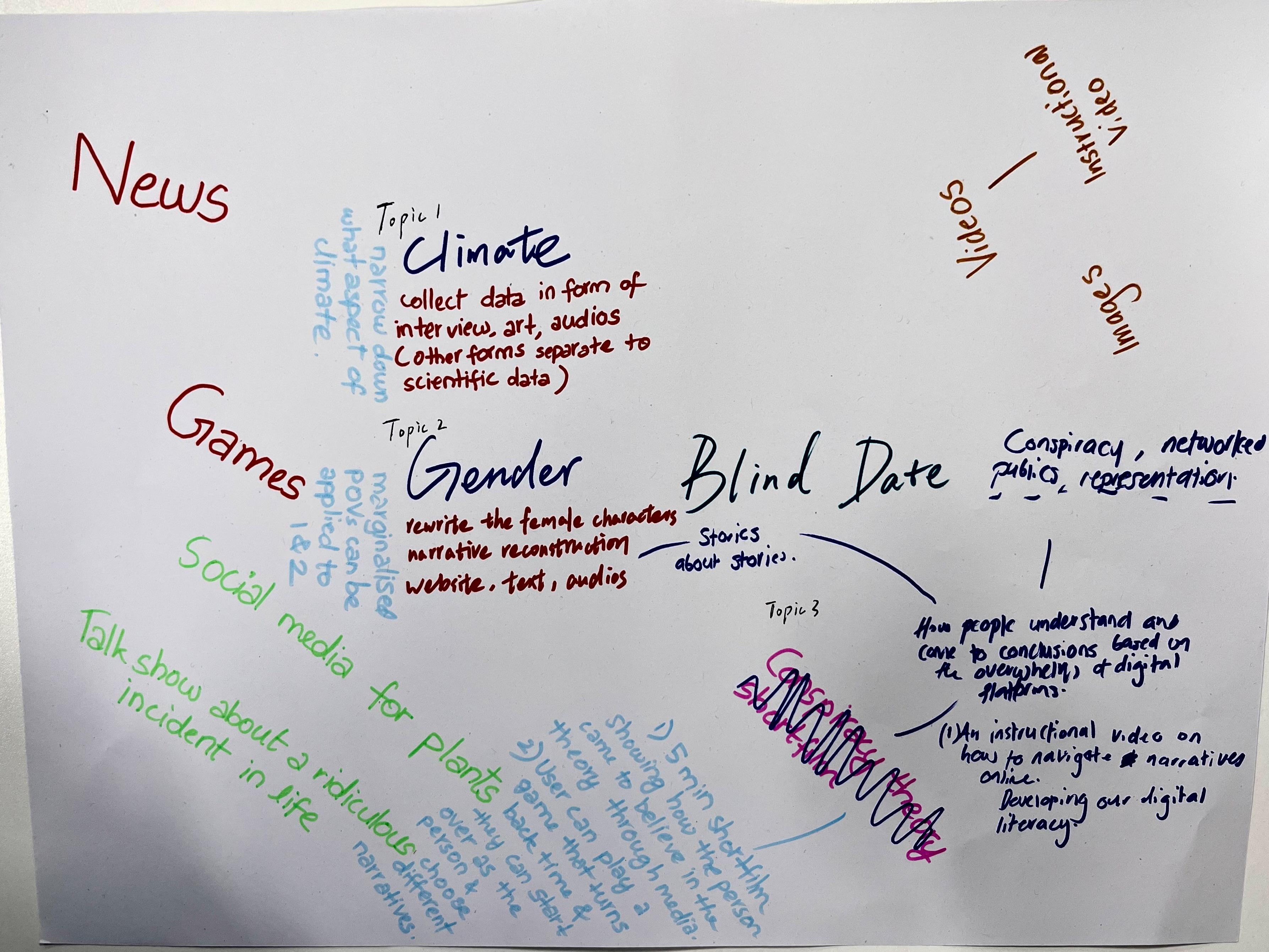
Image 1: Image of the paper we sketched our ideas and topics on.
The Pivotal Point
The breakthrough came when I suggested looking at Conspiracy Theories and Propaganda. Specifically, I was interested in the mechanisms of belief, how lifestyle fads and radical ideas are not just fake news, but narratives that are framed and shaped by media architecture to influence behavior.
This perfectly aligned with the "Narratives and Storying" brief. It allows us to explore how digital narratives impact physical reality.
We immediately jumped to imagining a short film or a game about conspiracy theories. Once again, we had to pull ourselves back. We reminded ourselves: Research first, artefact second.